DataTheta Data Management Services

Most teams struggle when data is duplicated, scattered, outdated, or poorly owned. We build management practices that keep enterprise data usable.

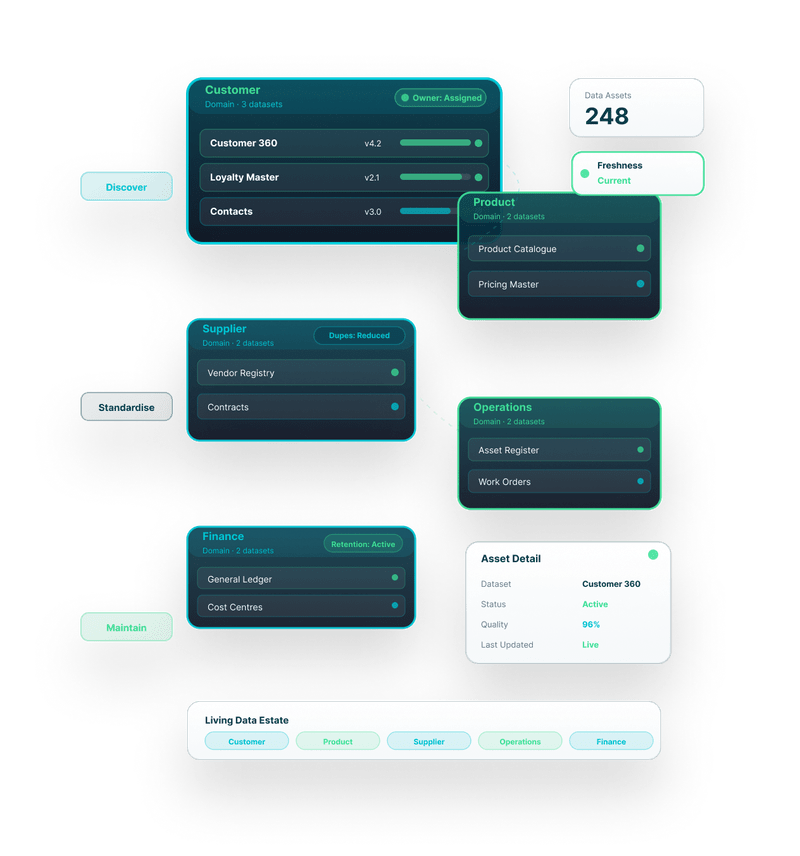
DataTheta enterprise data management platform

Trusted by Enterprise Leaders

The work that keeps data usable.

Every analytics, AI, and operational workflow depends on data that is organised, accessible, and maintained. If datasets are duplicated, undocumented, poorly structured, or difficult to find, teams waste time searching instead of solving business problems.

DataTheta’s Data Management service builds the processes, structures, standards, and ownership model needed to keep enterprise data clean, discoverable, secure, and ready for use.

Data Asset Inventory

Catalogued sources, datasets, owners, usage patterns, and business context across your environment.

Master Data

Core entity structures for customers, products, suppliers, locations, and accounts.

Data Standards

Naming conventions, documentation, metadata, and reusable management practices.

Lifecycle Management

Retention, archival, freshness, ownership, and maintenance rules for managed data.

Real AI challenges this service solves.

Patient and provider data management

Organise clinical, claims, provider, and operational data so teams find, maintain, and use trusted information.

Customer and product data consistency

Manage product, customer, loyalty, pricing, inventory, and supplier data across commerce, analytics, and supply chain workflows.

Asset data organised for operations

Structure asset, meter, maintenance, emissions, and field data so operational teams work from reliable records.

Research and quality data control

Manage trial, safety, quality, manufacturing, and regulatory data with clear ownership, retention, and traceability.

Managed reference and reporting data

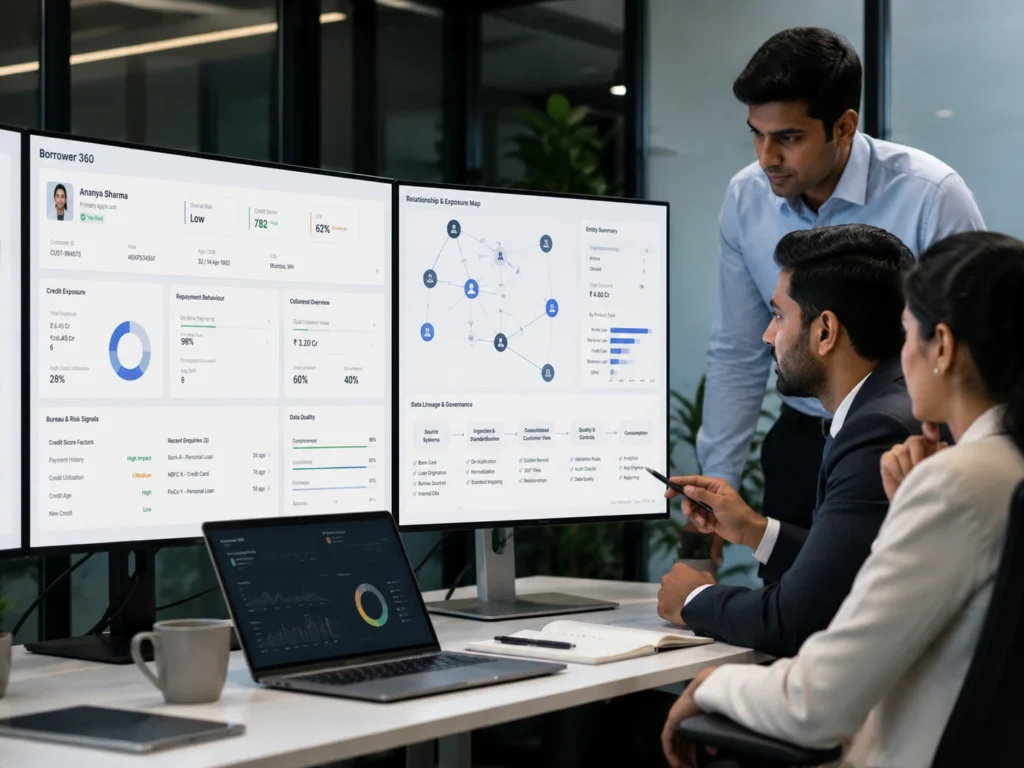
Standardise customer, account, transaction, risk, and reporting data used across regulated business workflows.

Supplier and production data structure

Organise supplier, plant, quality, inventory, and production data for planning, performance, and operational decisions.

Four phases. One managed data estate.

Discover

Data estate audit

We map your sources, datasets, ownership, duplication, documentation, usage, retention rules, and maintenance gaps limiting usability.

Design

Management operating model

We design asset structures, metadata standards, lifecycle rules, ownership workflows, and master data patterns for your teams.

Implement

Structures and standards

We establish inventories, documentation, entity definitions, retention practices, data standards, and management workflows your team can maintain.

Guide

Adoption and improvement

We train teams, refine standards, support adoption, and keep data management practices aligned as systems evolve.

Platform & tools we work with.
Cloud Platforms

Governance & Cataloguing

Architecture Patterns

Modelling Standards

AI systems in production
0 +
Avg. time to first outcome
0 Weeks
Forecast accuracy
0 %
Faster decision cycles
0 X
Revenue influenced by AI
$ 0 M+
Manual processing eliminated
0 %

The right service if AI is your next move.

CDO / Chief Data Officer

Data assets are growing without clear ownership

You need a practical management model that improves discoverability, reduces duplication, and gives teams confidence in enterprise data.

CTO / CIO

Systems are creating fragmented data everywhere

Your platforms are expanding, but data structures, lifecycle rules, documentation, and ownership need stronger consistency before scale.

Head of Analytics

Teams spend too much time finding data

Your analysts waste hours locating datasets, reconciling records, and interpreting undocumented fields instead of producing trusted insights.

Operations / Data Leader

Business processes depend on messy shared records

You need cleaner master data, better entity definitions, lifecycle rules, and maintenance workflows that improve operational reliability.

Related Industries

Data Management supports industries where accuracy, ownership, discoverability, and lifecycle control matter.

Healthcare

Patient, provider, and claims data organised for trusted use.

Retail & Consumer Goods

Customer, product, pricing, and supplier data managed across channels.

Energy

Asset, meter, emissions, and field data structured for operations.

Pharmaceuticals

Trial, safety, quality, and regulatory data managed for traceability.

What leaders say about working with DataTheta

Feedback from executives who needed cleaner, more usable enterprise data.

“DataTheta helped us finally understand what data we had, who owned it, and what needed fixing first.”

SM

James Walker

Technology Lead

Logistics Enterprise

“The team brought order to a data estate that had grown too quickly without standards or ownership.”

MC

Emily Lee

Business Intelligence Head

SaaS Enterprise

“DataTheta made data management practical. We got inventories, ownership, and usable standards without bureaucracy.”

AR

Rachel Morgan

Chief Data Officer

Healthcare Network

“They helped us reduce duplicate datasets and gave teams a clearer way to find trusted information.”

NP

Daniel Carter

Director of VP Data Platforms

Retail Group

“The engagement gave our operational teams better records, cleaner ownership, and fewer data disputes.”

JW

Priya Shah

Head of Analytics

Energy Operator

“We needed stronger data management before scaling AI. DataTheta gave us the structure to move forward.”

EL

Michael Adams

Chief Technology Officer

Pharma Company

Featured Case Studies

See how DataTheta delivers AI strategy, GenAI solutions and intelligent automation for real enterprise business outcomes.

AI copilot for clinical and claims workflow automation

Built a secure AI assistant to summarize records, search policies, review claims and support faster operational decisions.

GenAI demand insights for smarter forecasting

Designed an AI powered planning assistant that analyzes sales, inventory and promotion data in order to improve demand decisions.

AI automation for regulatory reporting workflows

Created intelligent workflows to extract, classify, validate and summarize compliance data for faster reporting and audit readiness.

Data Management FAQs

Answers to common questions about organising, maintaining, and using enterprise data.

Start when data is duplicated, undocumented, hard to find, poorly owned, or difficult for teams to trust and maintain.

Yes. Governance defines rules and accountability, while data management organises, maintains, documents, and operationalises data assets across systems.

Not always. DataTheta can improve structures, ownership, metadata, and lifecycle practices before recommending catalog or master data tools.

You receive a data inventory, ownership model, lifecycle rules, standards, documentation templates, entity definitions, and an execution roadmap.

Yes. DataTheta can support implementation through embedded experts, operating model rollout, documentation, tooling configuration, and ongoing improvement.

Latest Blogs

Explore practical insights on data strategy, AI readiness, analytics, and building production-grade AI systems.

Blog

What Is Agentic AI? How It Works, Benefits, and Applications

Introduction Agentic AI refers to artificial intelligence systems that can understand goals, plan actions, use tools, make decisions, and complete multi-step tasks with limited…

Blog

What Is Data Migration? Its Process, Benefits, and Best Practices

Introduction Data migration is the process of moving data from one system, application, storage environment, or format to another. Organisations undertake migration when modernising…

11 min read Read article →
Blog

What Is Digital Transformation? Its Benefits, Strategy, and Business Impact

Introduction Digital transformation is the strategic use of digital technologies, data, automation, and new operating models to improve how an organisation works and delivers…

11 min read Read article →
Blog

What Is Business Intelligence? Its Benefits, Tools, and Use Cases

Introduction Business intelligence is the process of collecting, organising, analysing, and presenting business data to support informed decisions. It transforms information from finance, sales,…

10 min read Read article →
Blog

What Is Data Governance? Its Principles, Benefits, and Best Practices

Introduction Data governance is the framework of policies, roles, standards, processes, and controls used to manage organisational data responsibly. It helps ensure that information…

10 min read Read article →
Blog

What Is Intelligent Automation? Its Technologies, Benefits, and Use Cases

Introduction Intelligent automation combines artificial intelligence, robotic process automation, analytics, and workflow technologies to automate complex business activities. Unlike basic automation, which follows fixed…

10 min read Read article →

Organise data before scale.

Book a 45-minute discovery call. We’ll show where data is scattered, where ownership is weak, and what we’d organise first.

Naturally Followed By

Data Governance

Once data is organised, we define ownership, policies, quality rules, and controls that keep it trusted.

Data Warehousing

Managed data becomes more valuable when structured into warehouse models ready for analytics and reporting.

Business Intelligence

Once data is managed, we turn it into dashboards and reporting teams can rely on.

©2026 Copyright DataTheta – Lance Labs Technology Private Limited

Scroll to Top

Let’s Talk About Your Data Goals

Tell us what you’re planning. Our team will review your requirements and get back with the right solution for analytics, AI, dashboards, and data transformation.